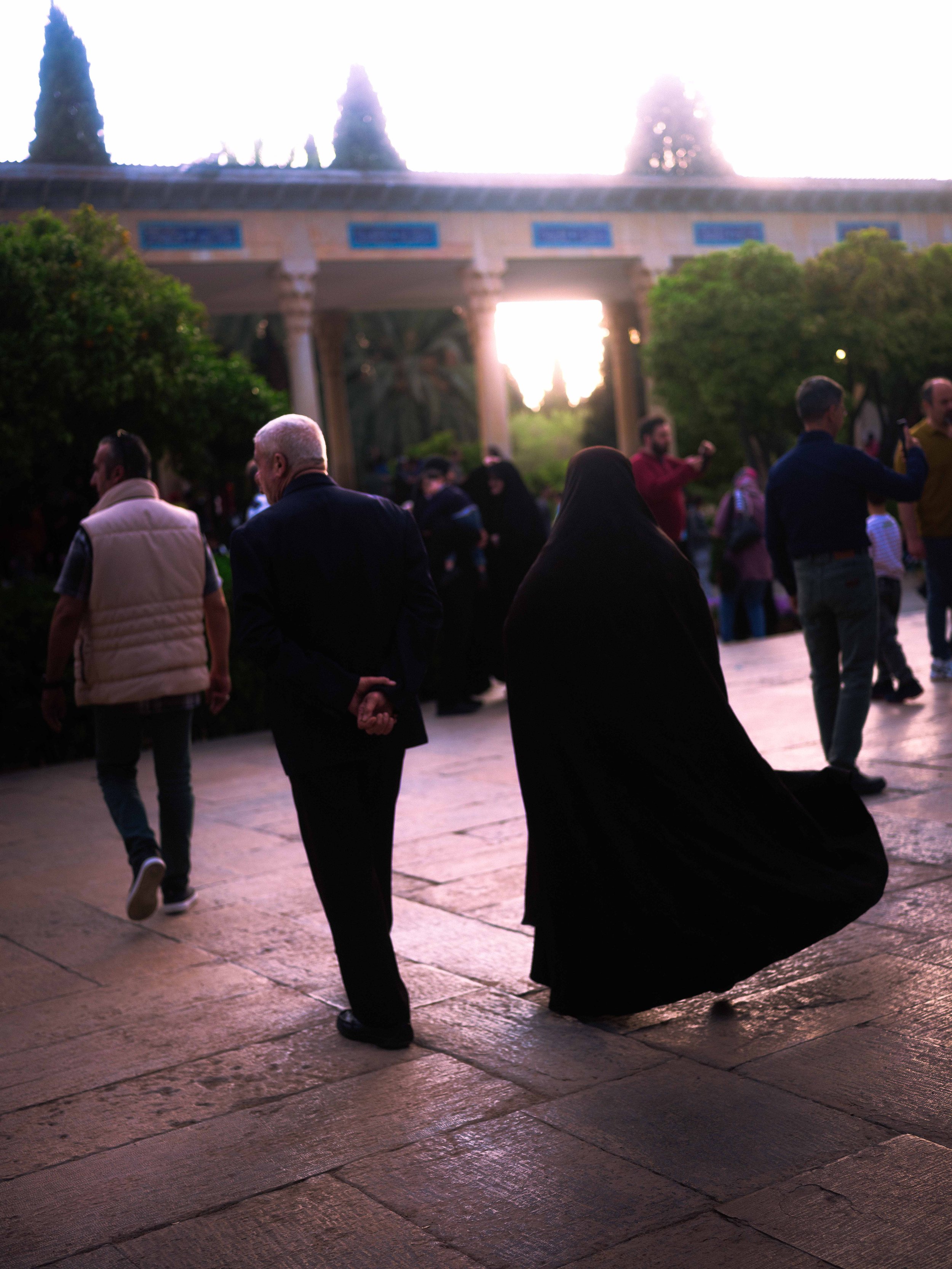
Iran - The Sequel
This was my first taste of nomadic life.
I awoke long after the sunrise with an extra blanket on me. The nomad family had noticed, after I fell asleep, that my sleeping bag was inadequate against the mountain’s cold nights.
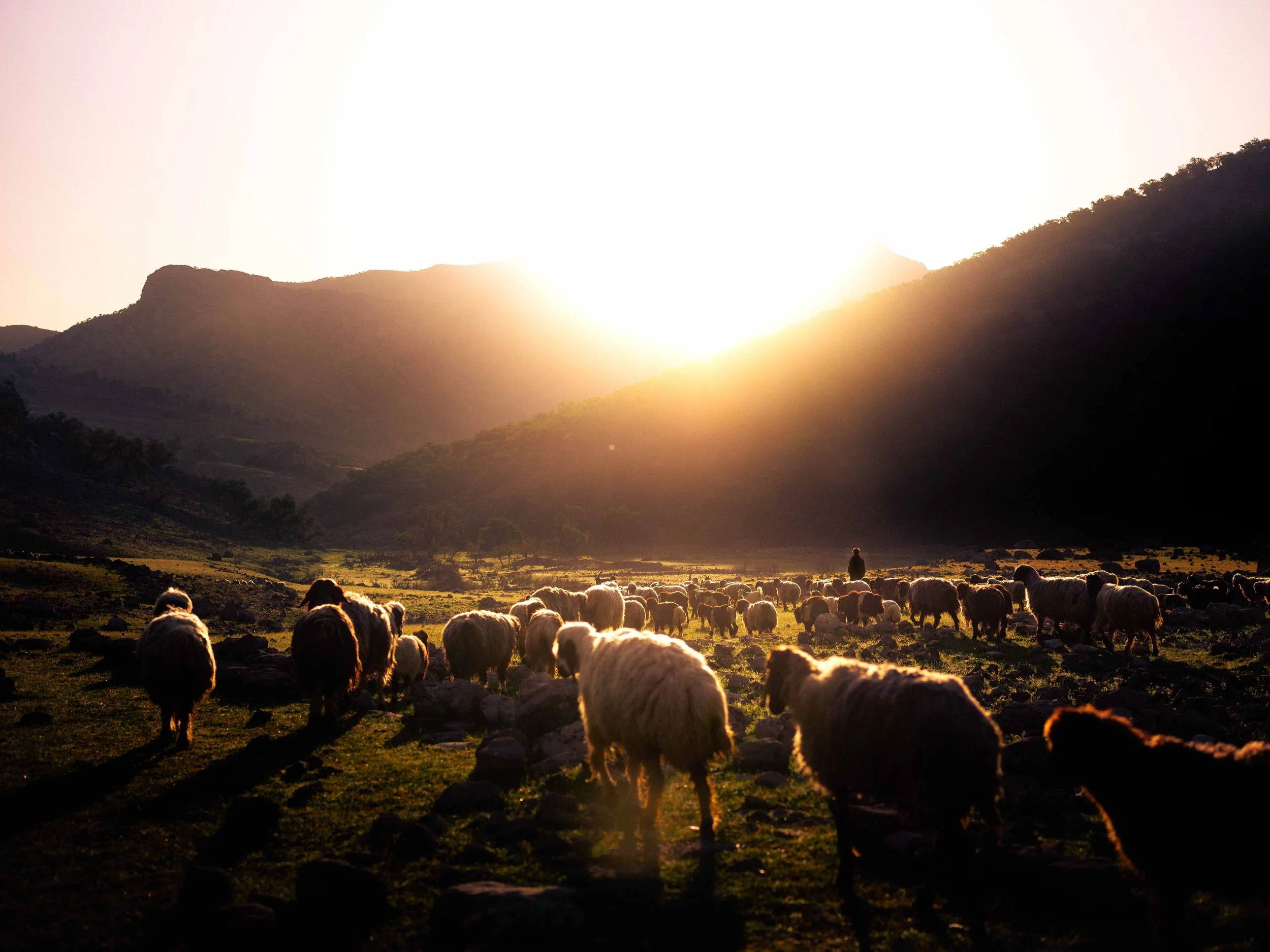
Looking around, only the mountain folk were awake - Mohammad, Sina, and the nomads - with 2 fires already established, breakfast being made, and the goats being herded in preparation.
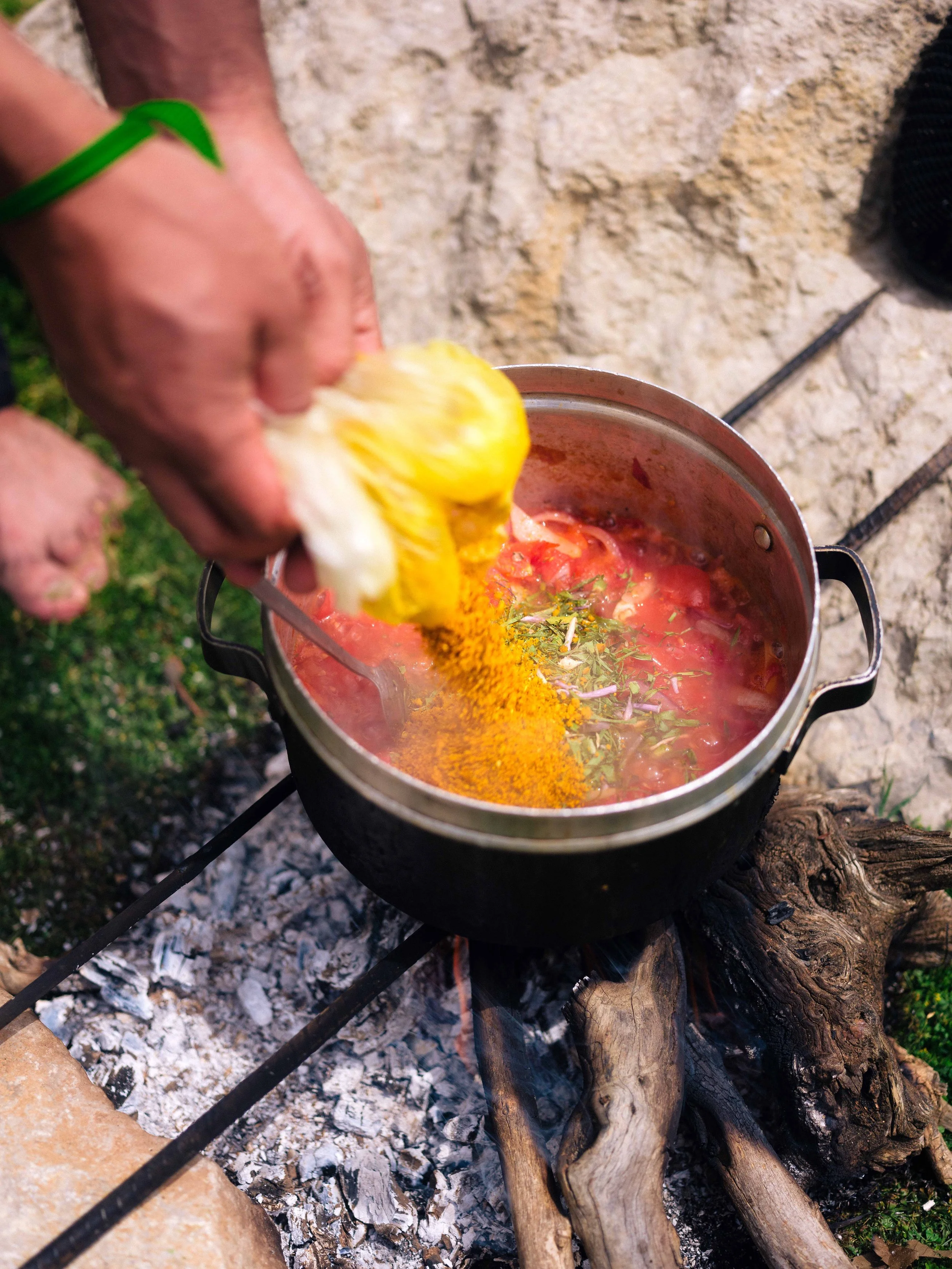
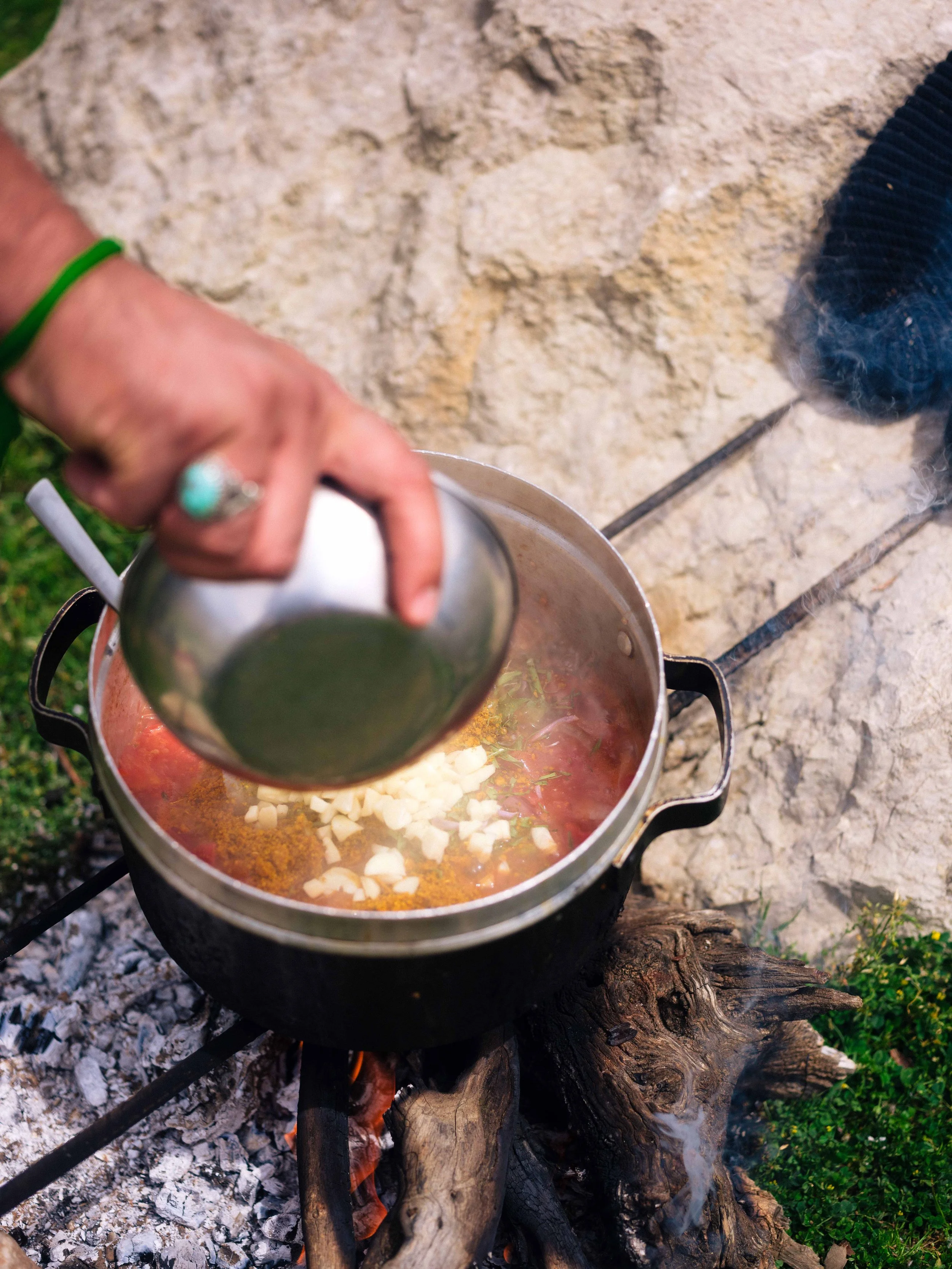
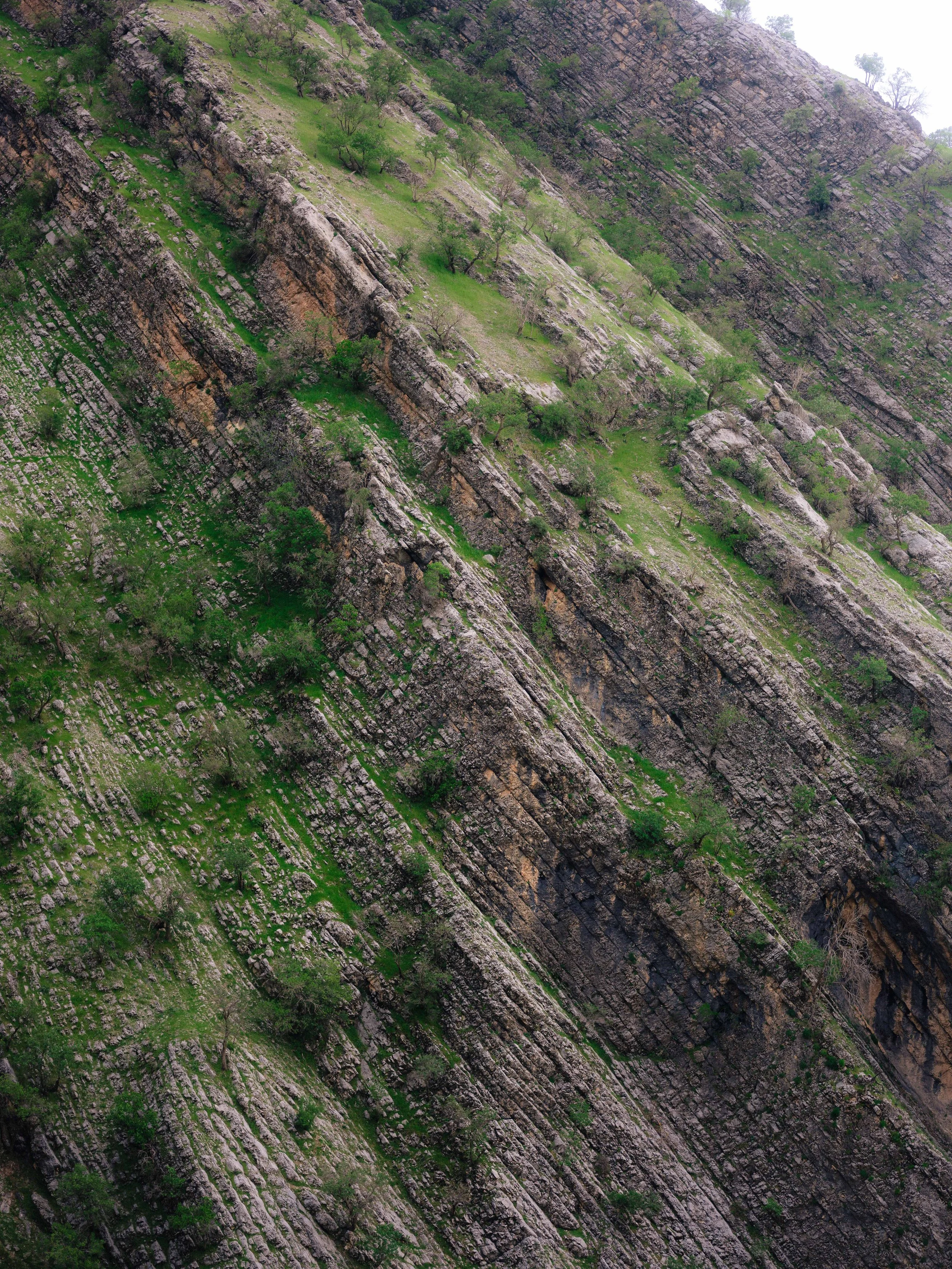
The valley hosts dozens of families through the winters, and with this season’s exceptionally fertile rains, the land was greener than ever, and many have delayed their departure in enjoyment. The children, too, were delighted with additional days in the school within the valley, just a few kilometers from our camp.
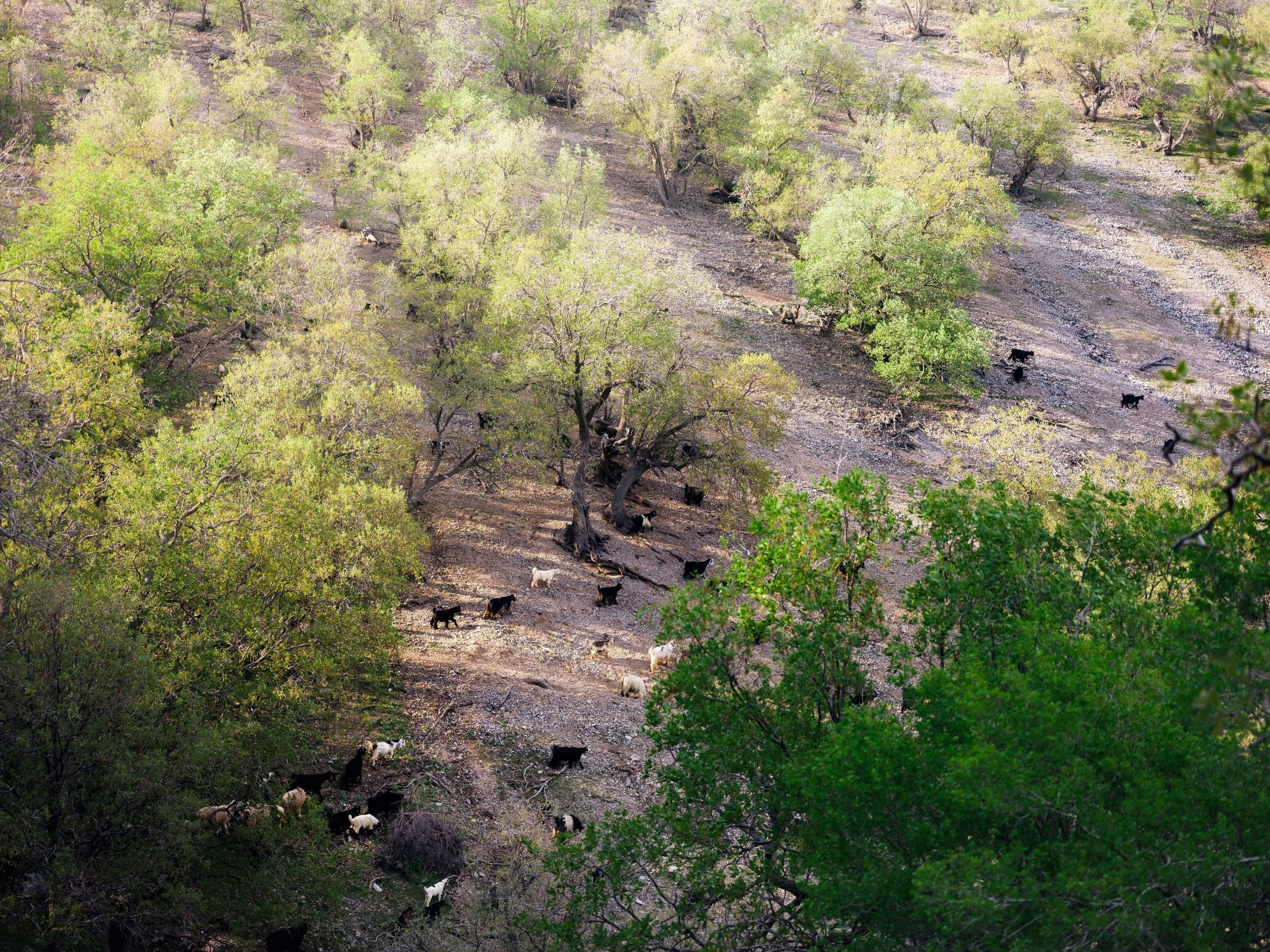
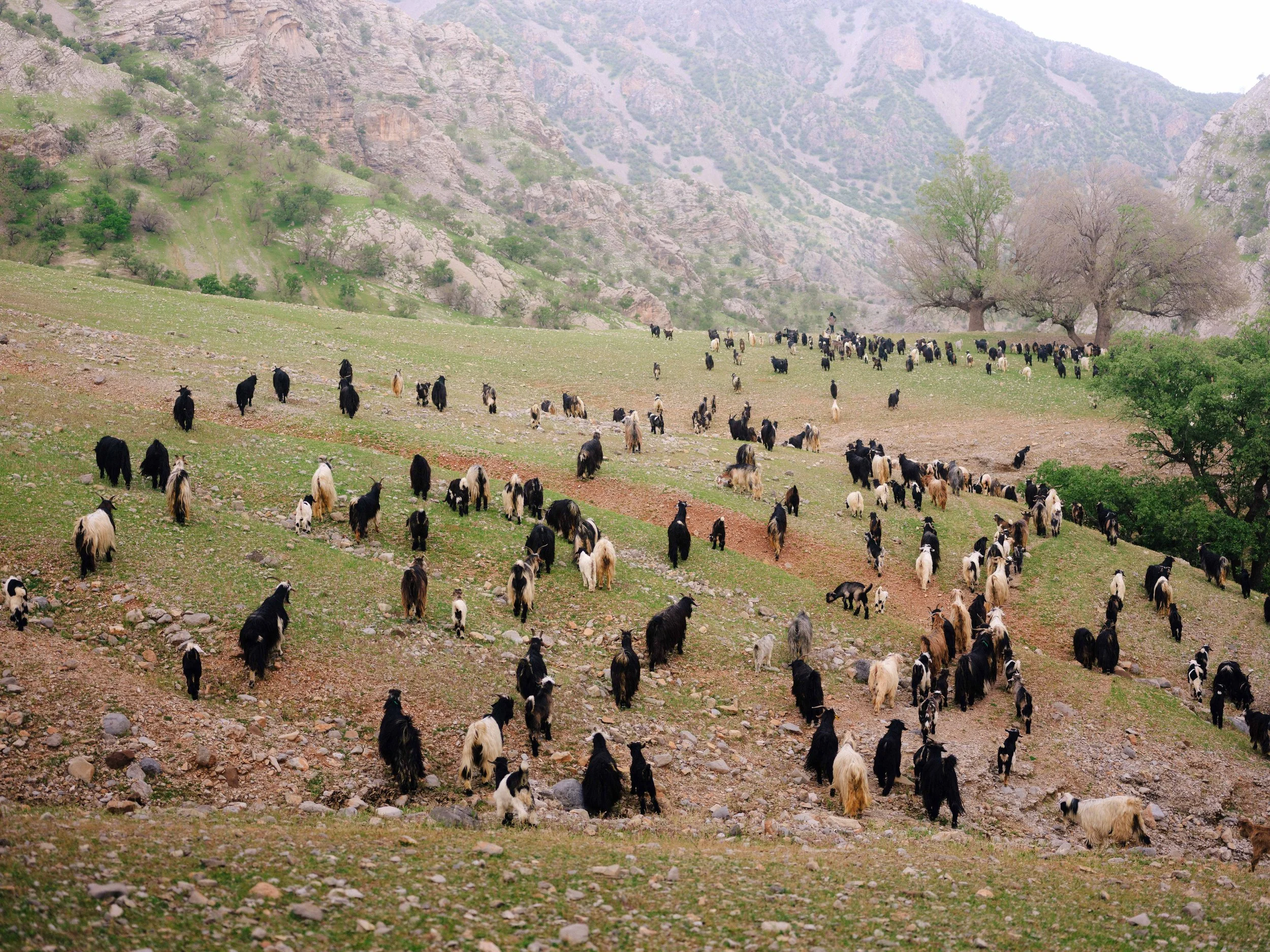
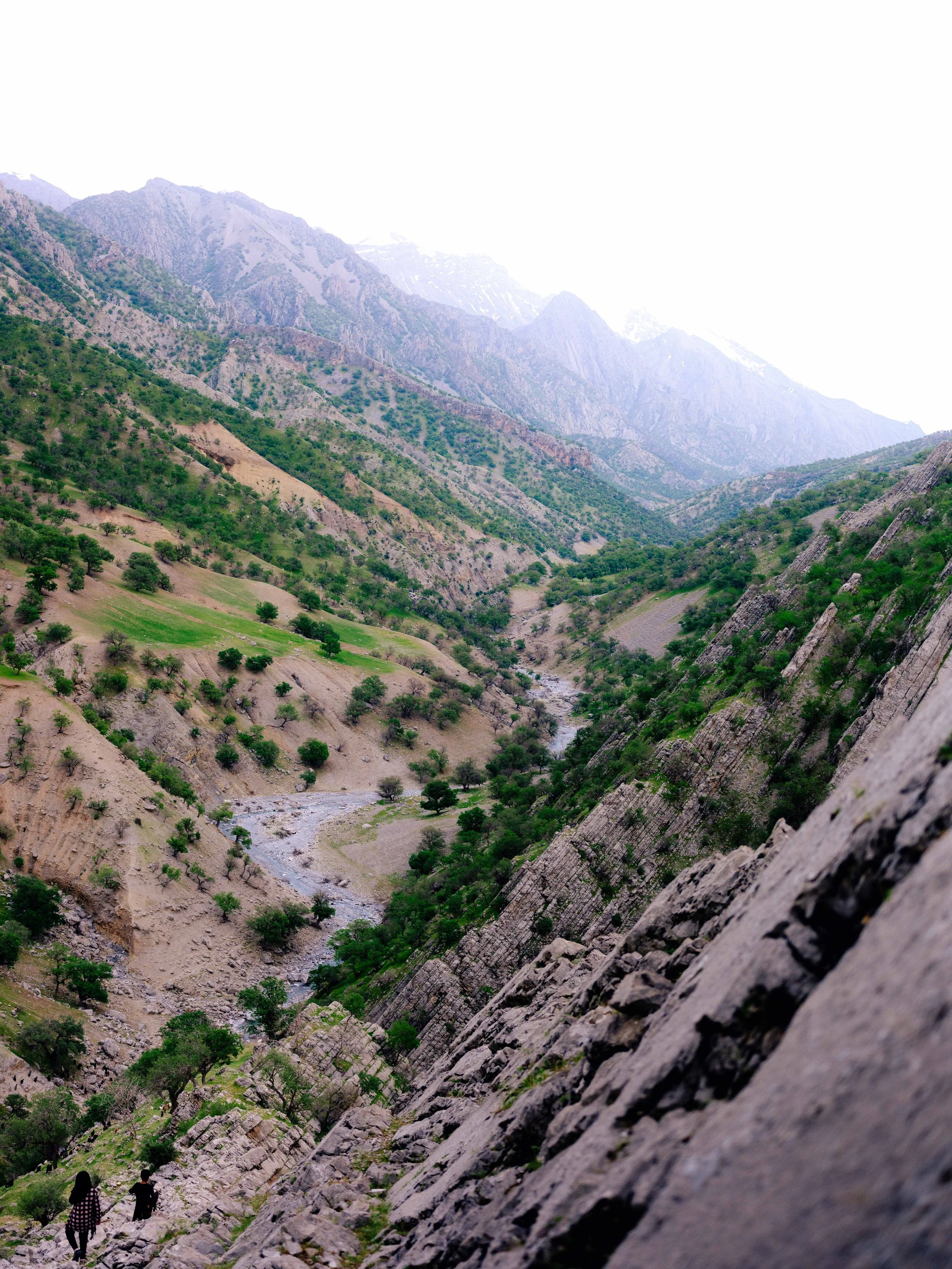
The Mokhtari family whom I travelled with, headed by Ramezan, was not the first, nor last, to begin their migration east.
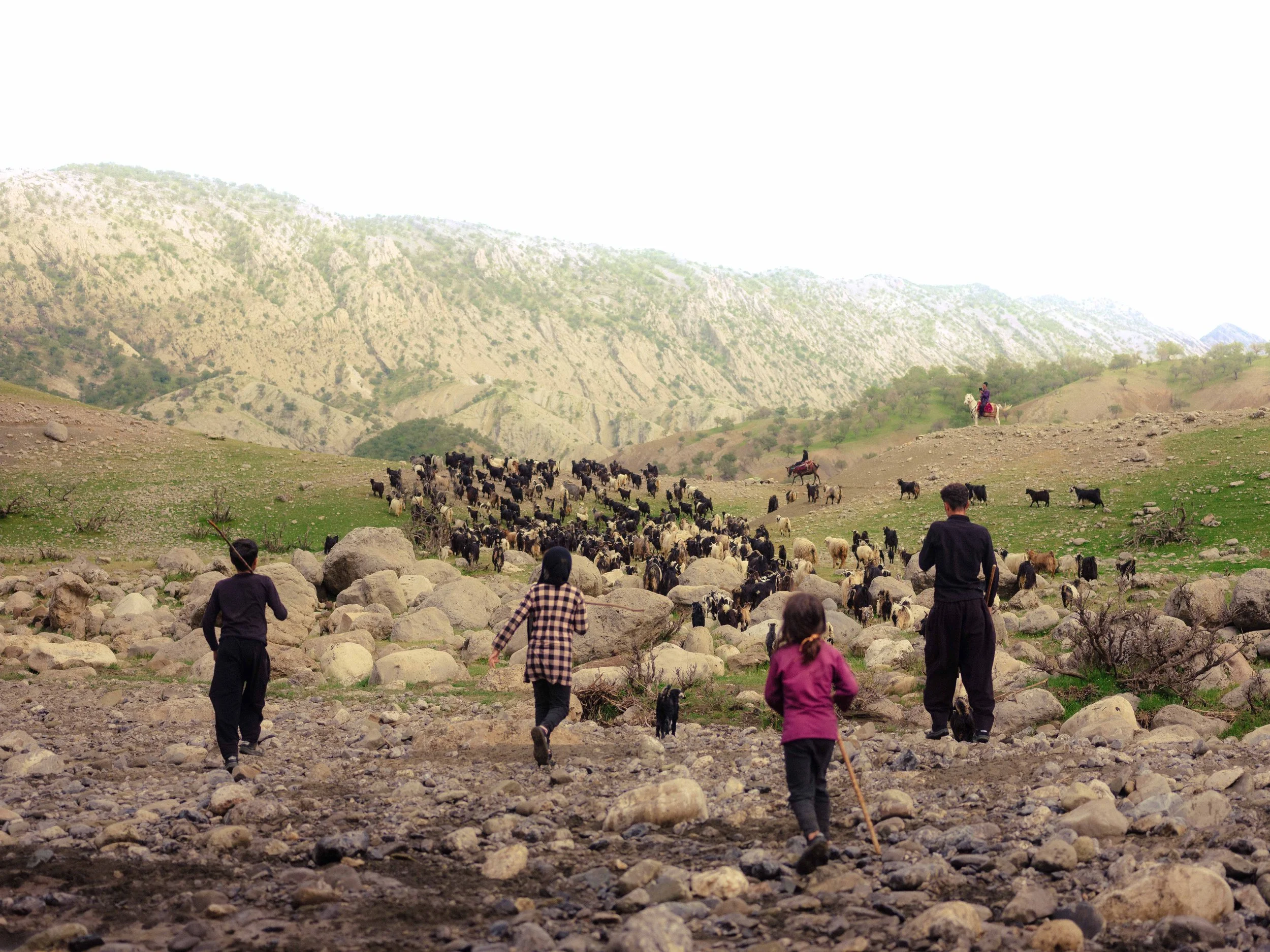
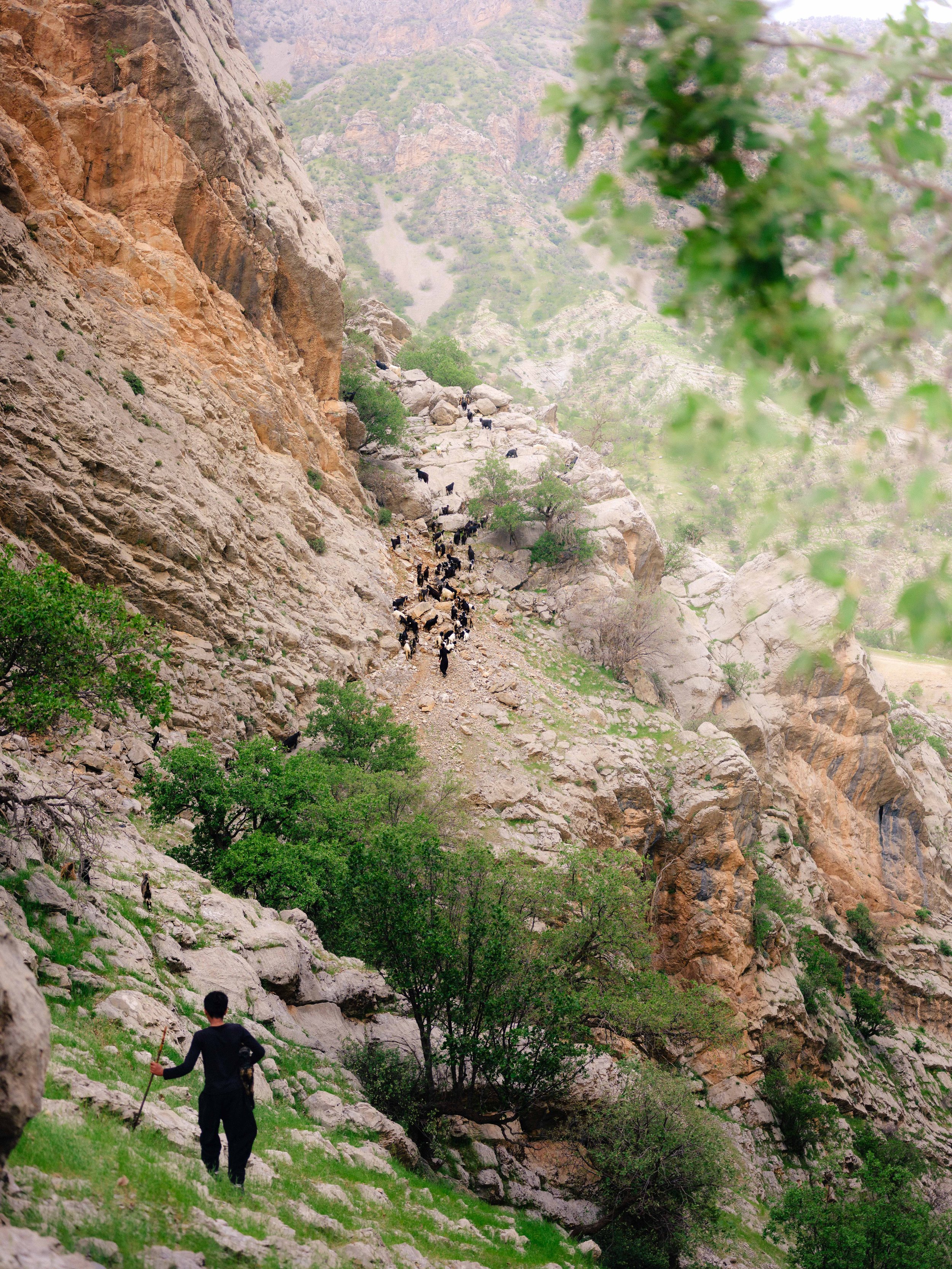
The photo at the top is of a different family starting their journey early. Despite embarking from the same valley and bound for the same summer lands, migration routes differ due to ownership rights to the grass on different paths.
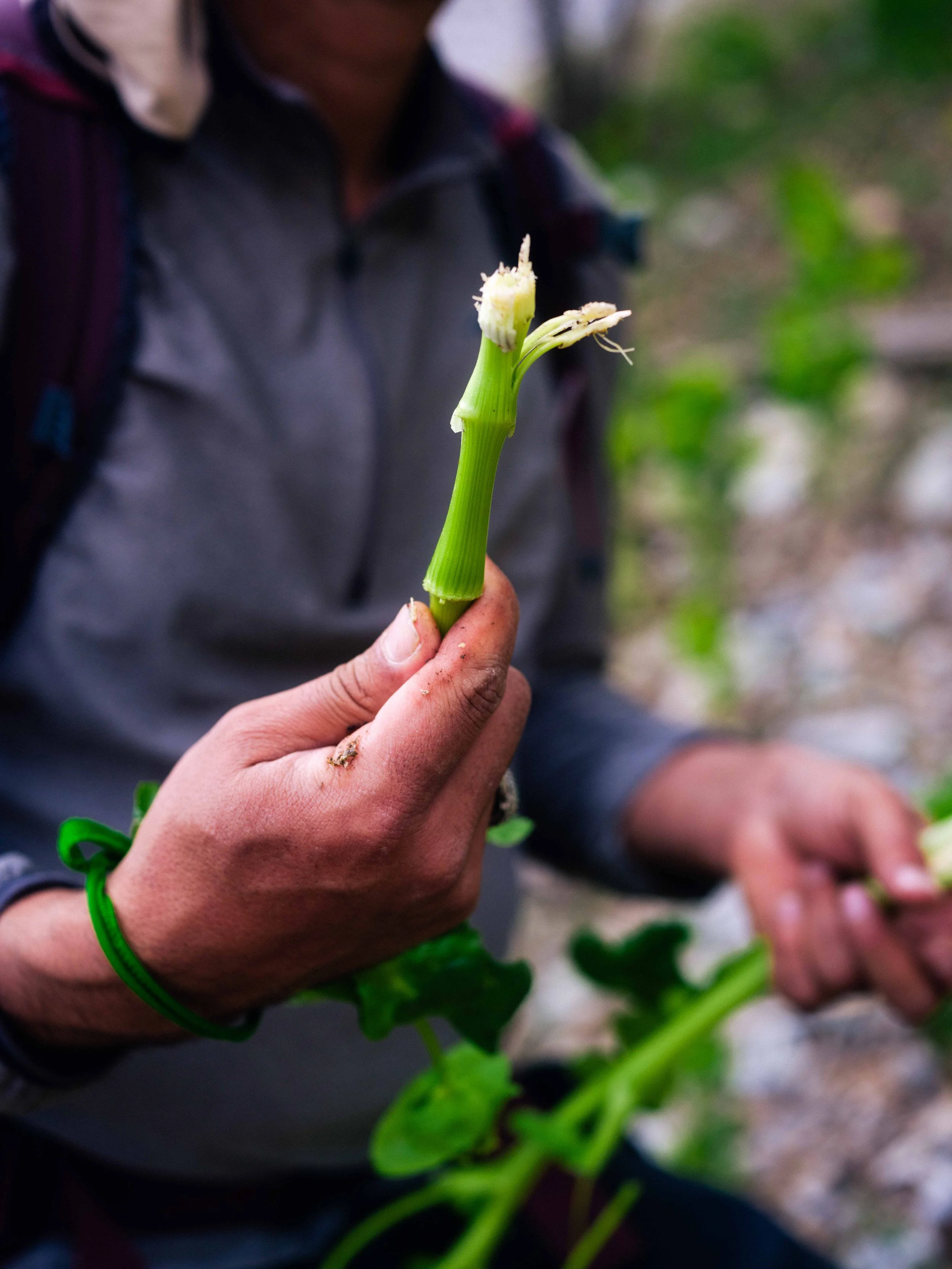
The goat herd is the responsibility of the sons - guiding, counting, and protecting. Being a demanding task on foot, they set off before the rest of the family, who travel with horses, donkeys, and the rest of the camp items. Most follow this tradition of splitting the entire family into two groups - the men and the sons with the goat herd, and the “Family group” consisting of women, children, horses, pack animals, and supplies.
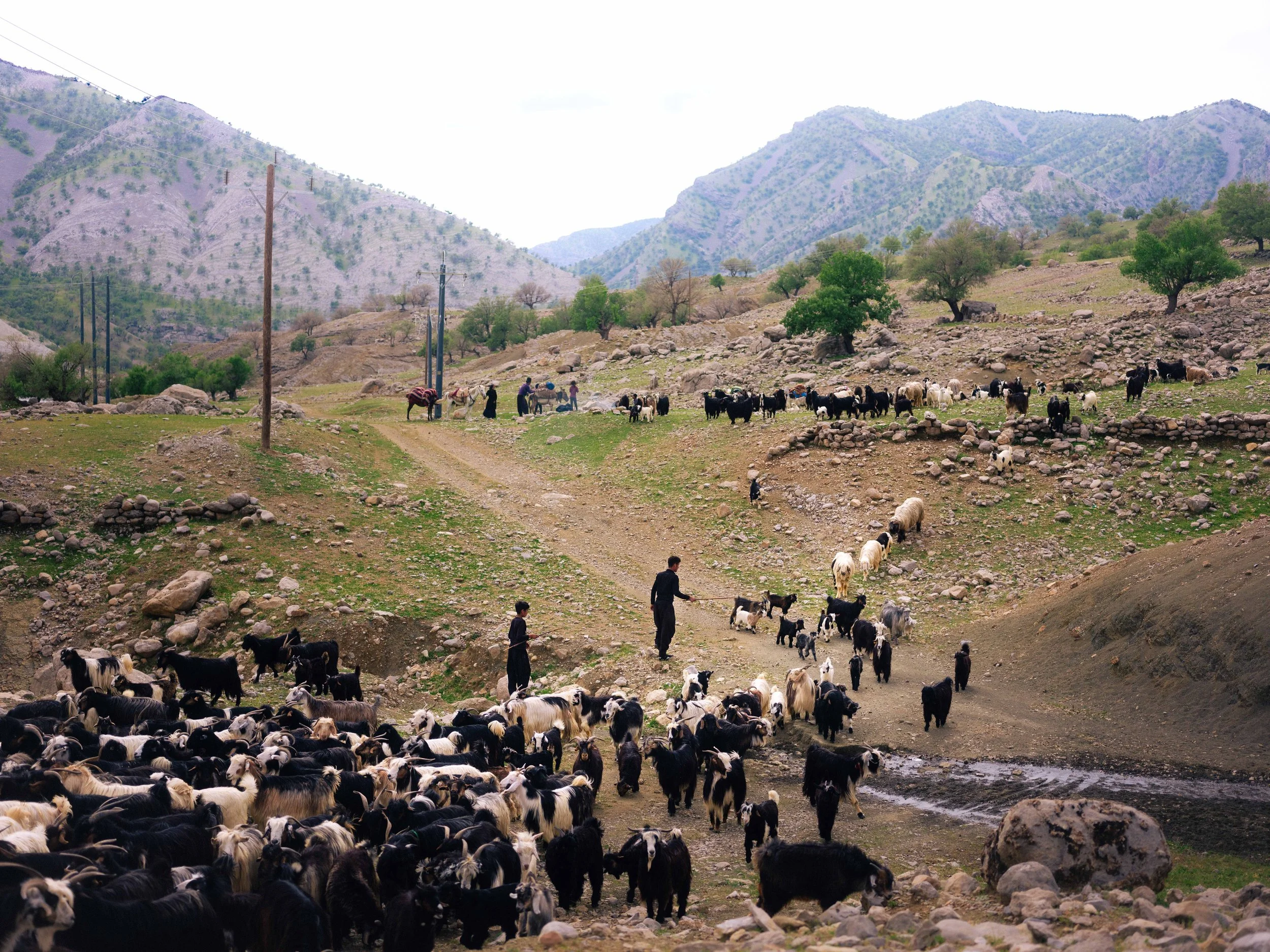
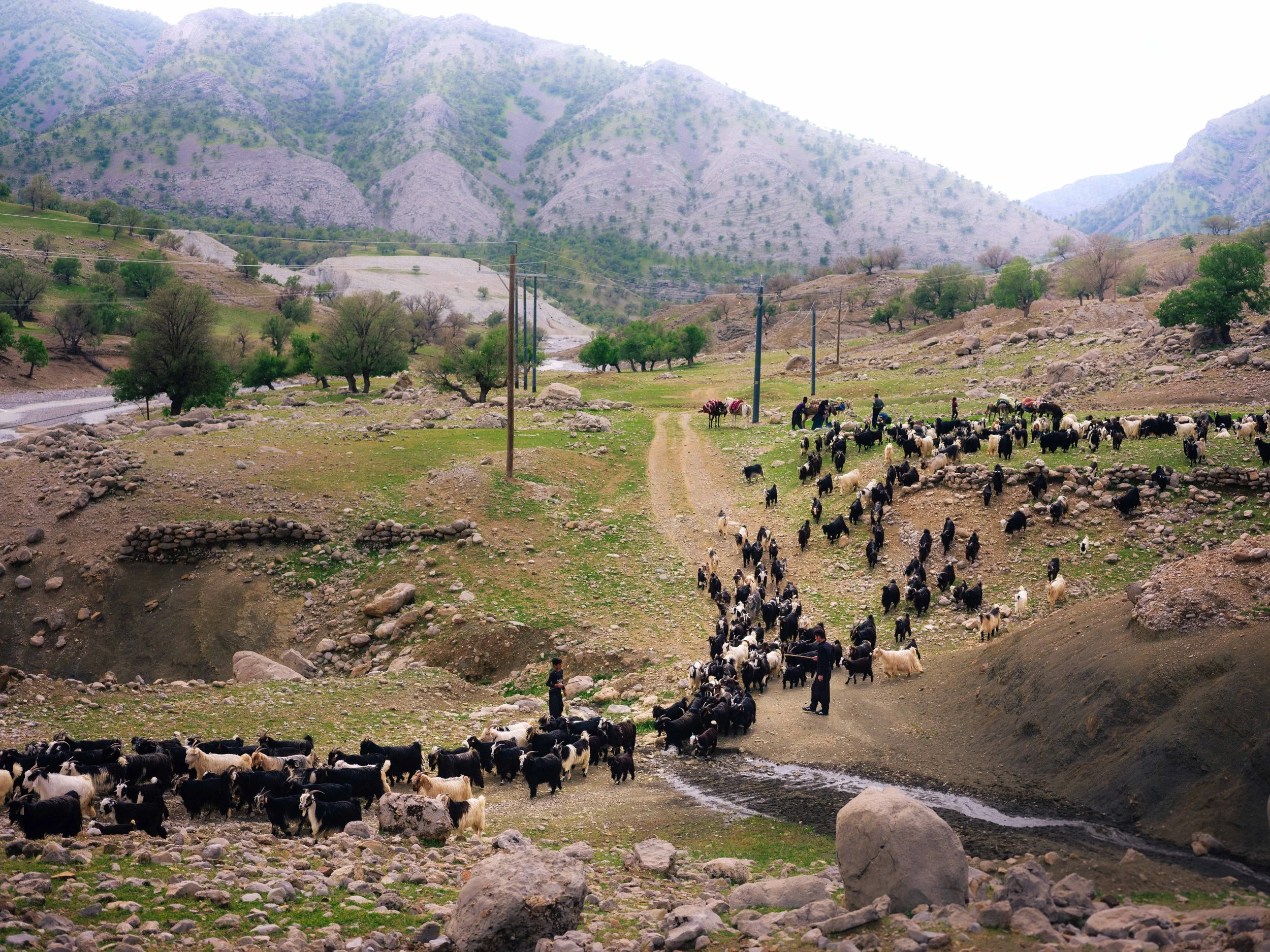
The sons were soon joined by their sisters as their father watched with pride.
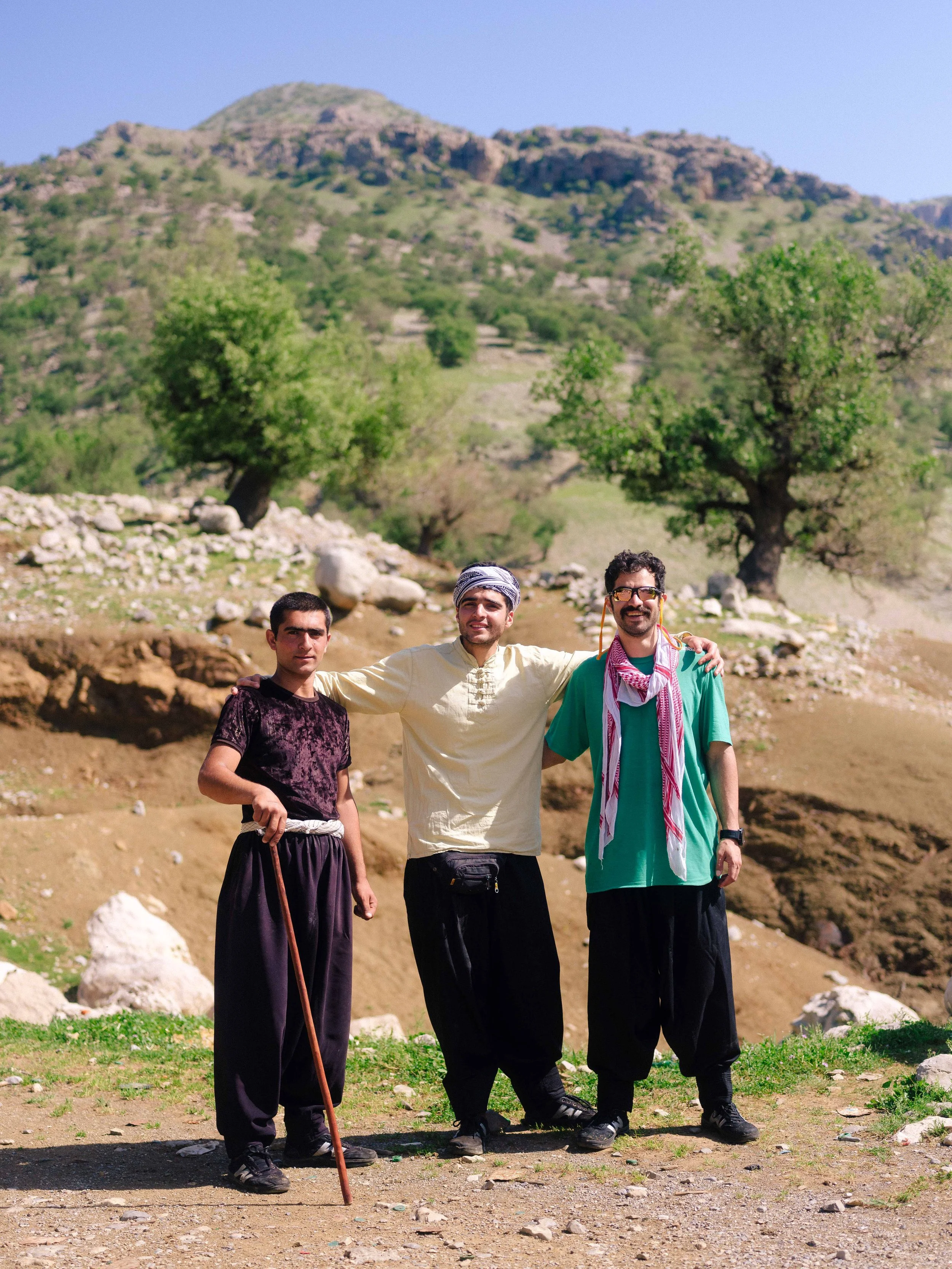
While the Mokhtari family was setting off, Mohammad had spent much of the morning visiting other families in the valley, bringing them flashlights, power banks, sugar, and other necessities. It shouldn’t be surprising then that all the nomads knew him, or have heard of him from close relatives.
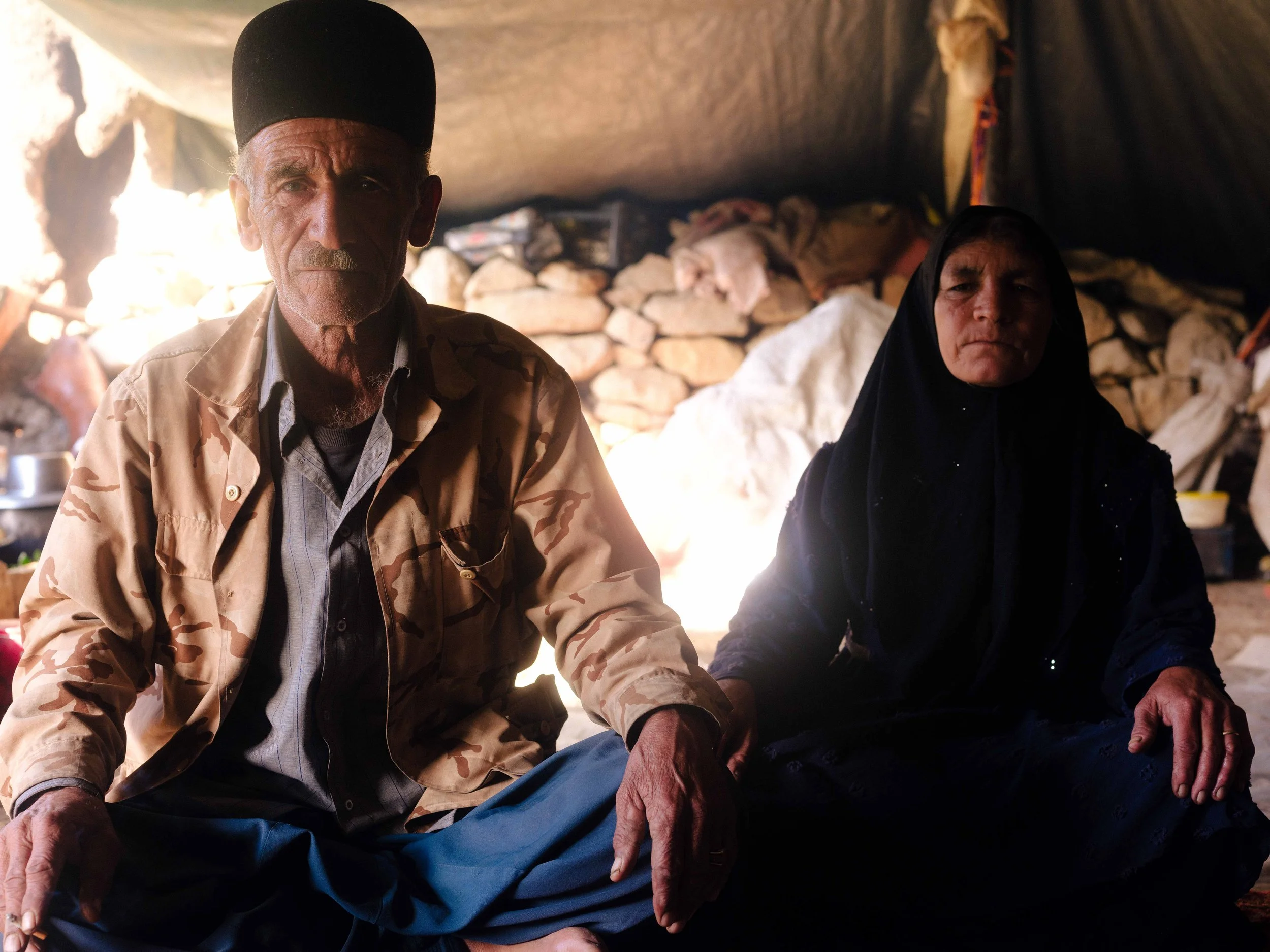
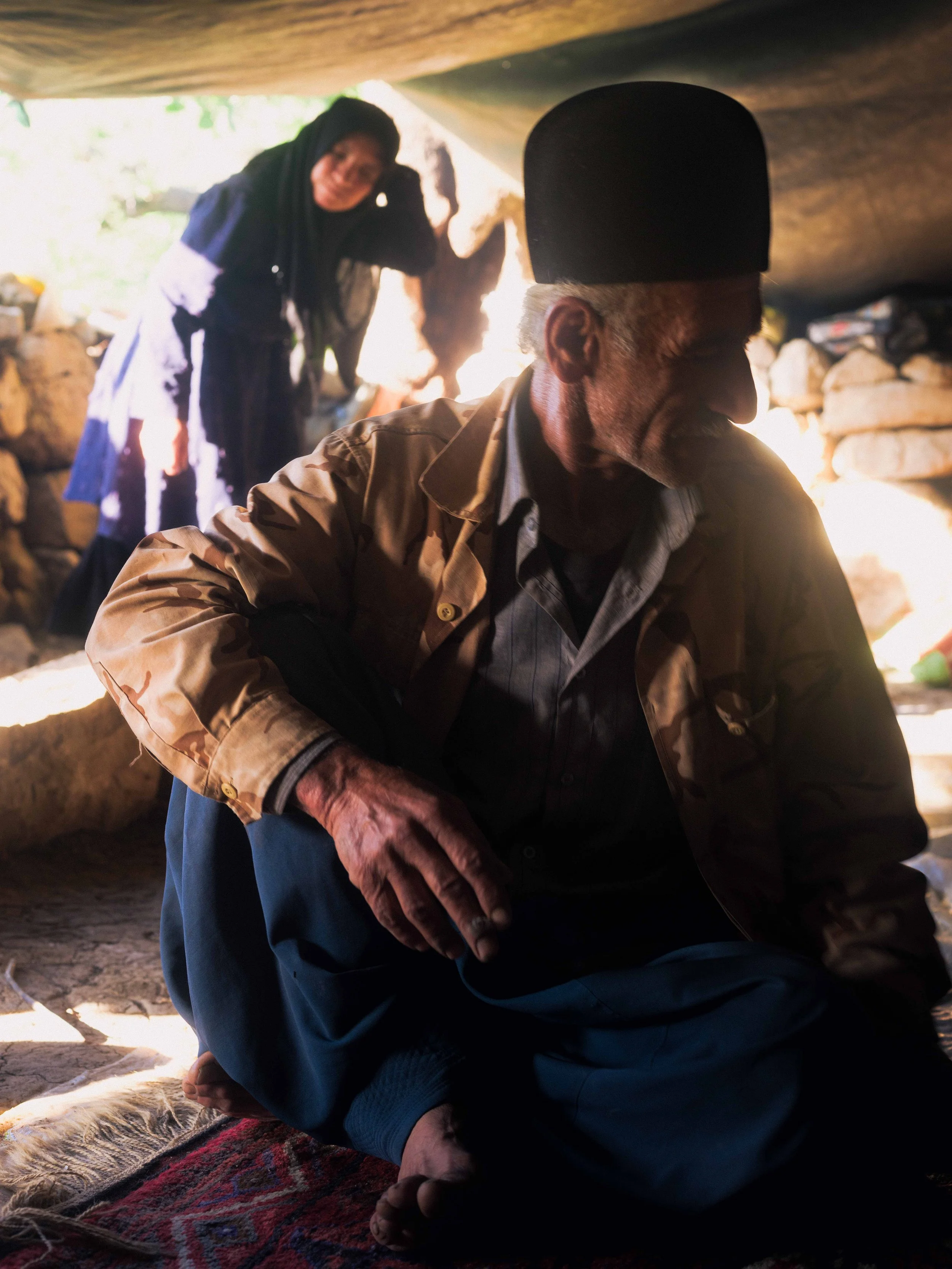
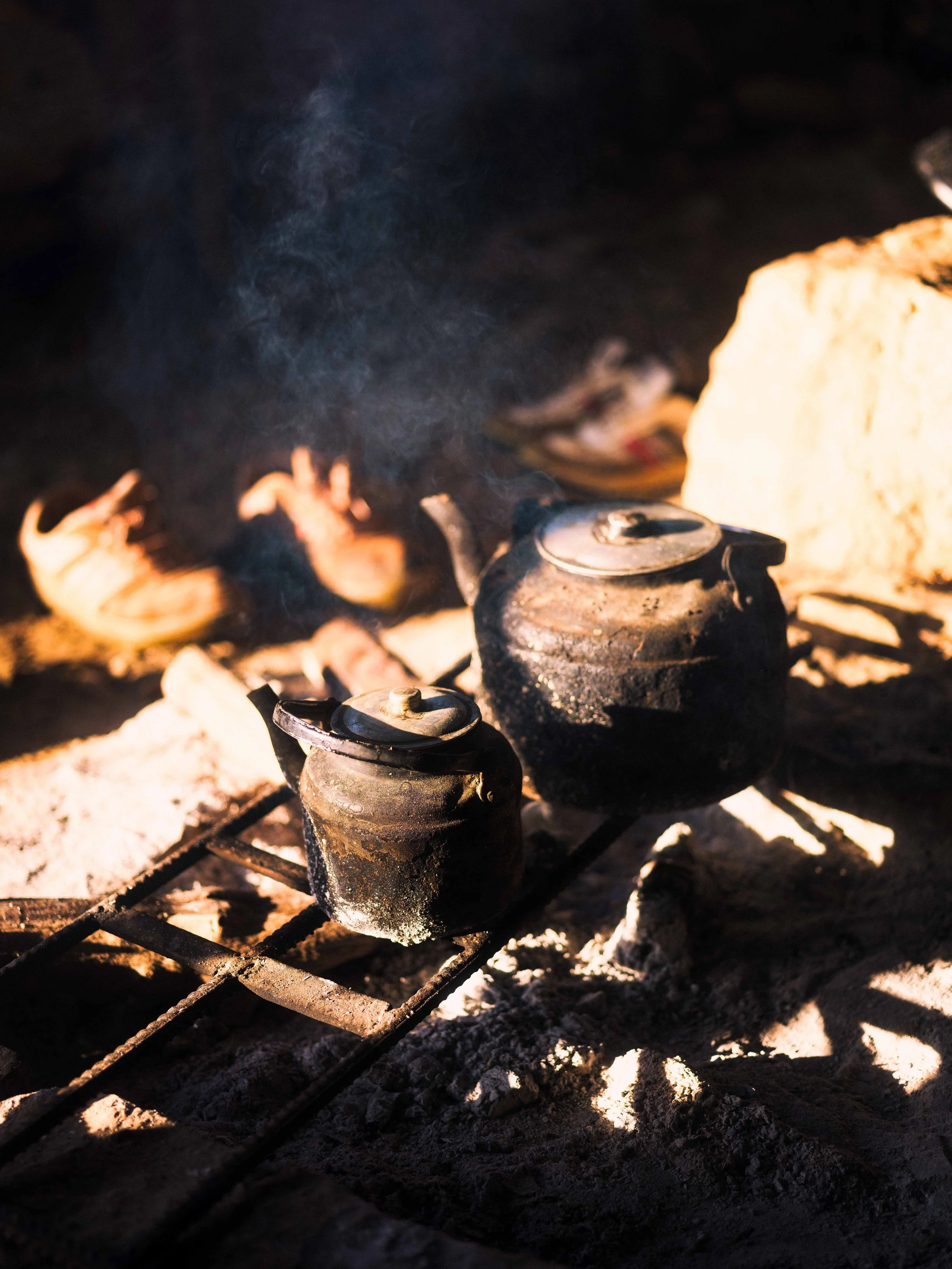
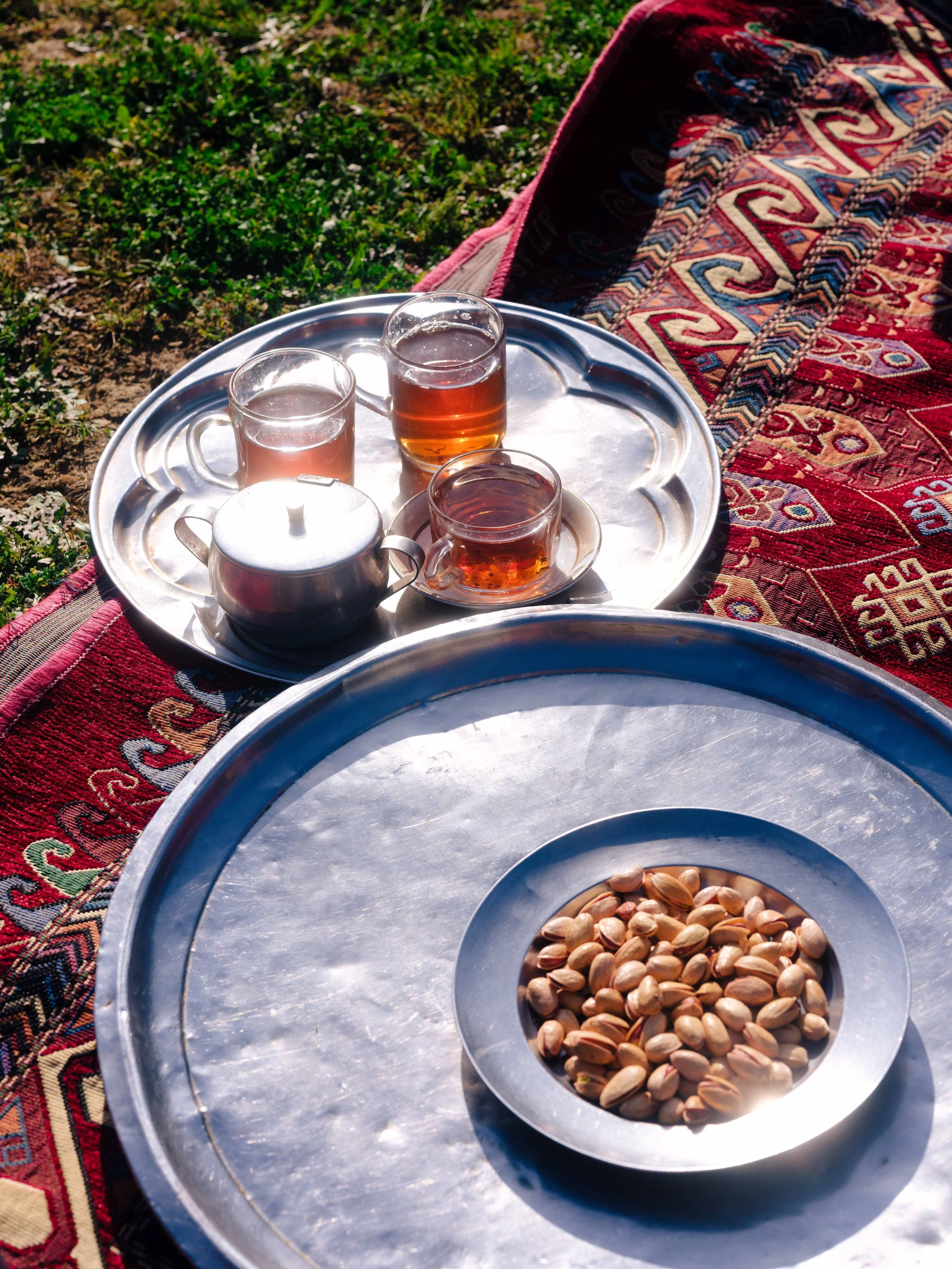
Many returned the kindness with tea and snacks. One nomad, famed for his singing of an old nomadic verse, prepared us tea before his performance.
Ashkan Mokhtari
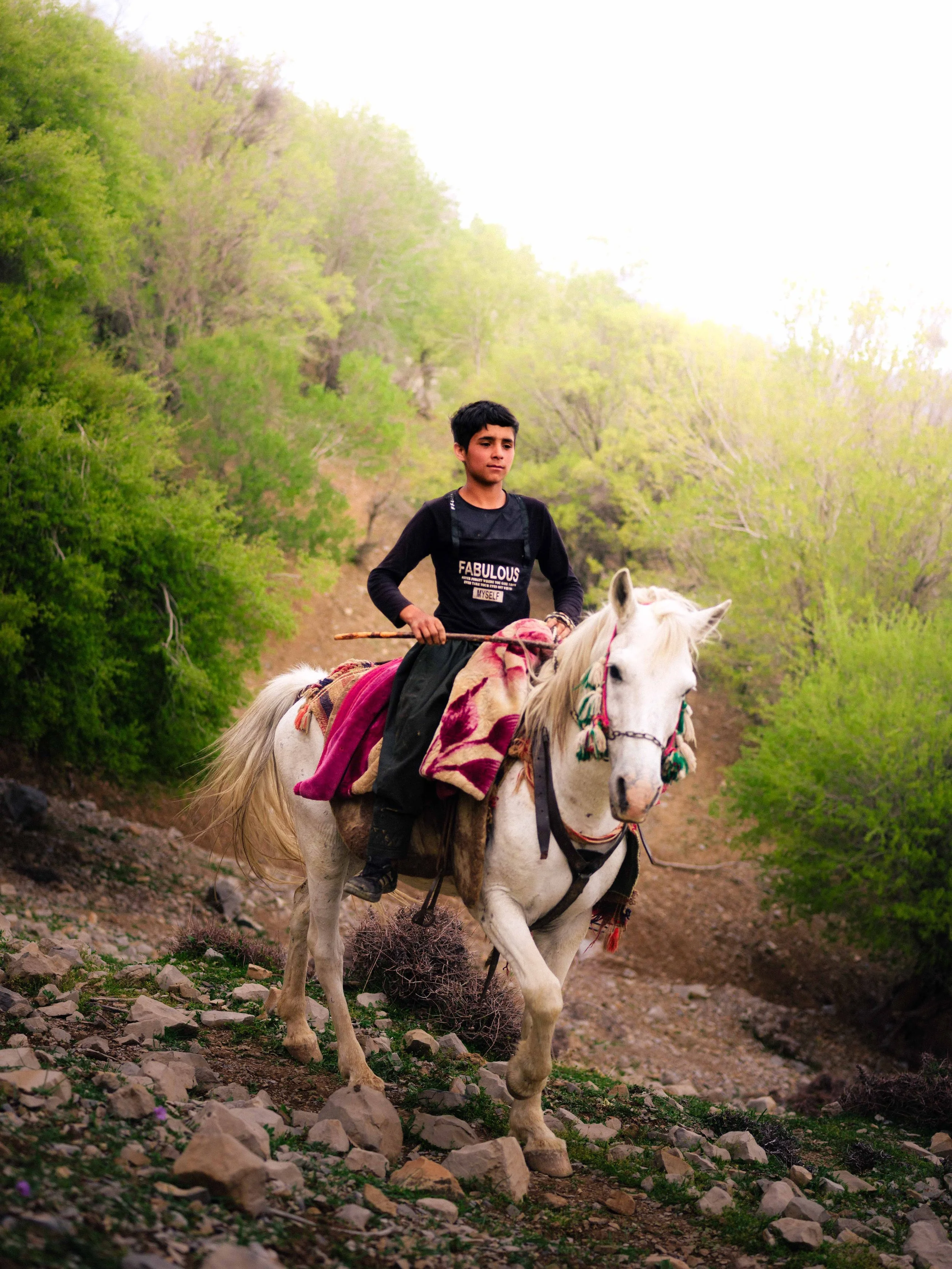
The youngest son of the Mokhtari family at age 14, Ashkan carries with him an inquisitiveness unmatched by his brothers.
On the late afternoon of my first day with the family, Ashkan approached me in shyness with a notebook in his hand. Every page from the notebook had 3 columns of text - the first held Farsi words, the second being the words in English, and the third being the pronunciation of the English words in Farsi.
Tentatively, he would point to an English word, pronounce it as best he could, and look to me for verification. We went through page after page, but even through his determination to improve, I could see his growing frustration. So I began learning with him - as he checked his English with me, I would learn the Farsi word from him until I, too, had pages of translations.
And thus language pop-quizes became an integral part of our joint migration; Askhan would point to a mountain, raising his eyebrows at me to issue the question. “Koo”, I would say, before raising my eyebrows the issue the question back at him. “Mountain!”, he would say cheerfully, before diligently returning to his herding duties.
“Some children are good, but they do not always stay that way”, Sara tells me, as we watch him perform his duties alongside his brother, hoping that so many things about him will never change.
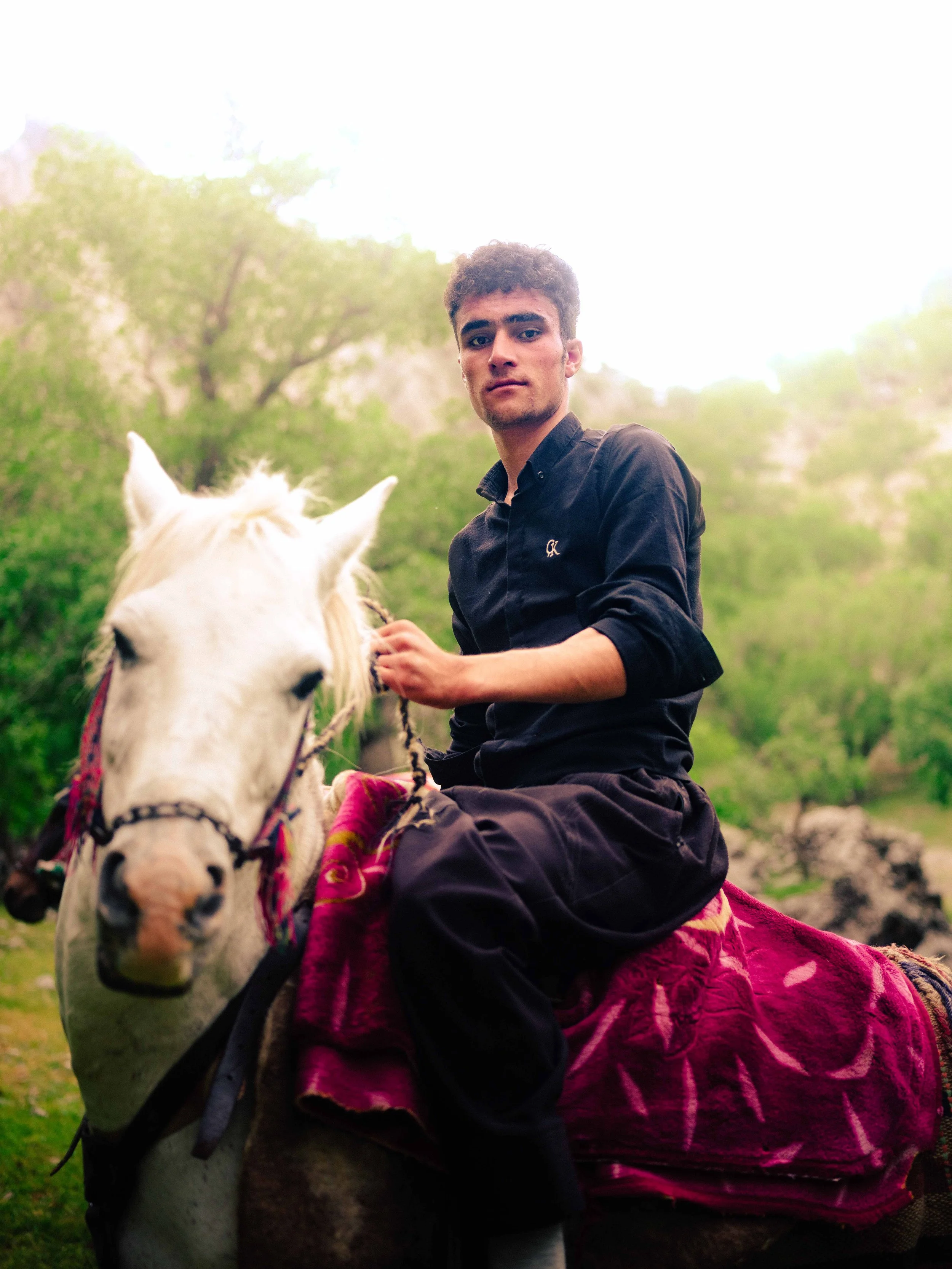
Ferdows Mokhtari
Despite being 4 years younger than the eldest son, Ferdows shoulders the responsibilities of one as the eldest currently works in the city.
The last to close his eyes each night yet always up before sunrise to watch the herd, it not only falls on him to share his father’s burdens, but also to set a consistent example to his younger brother Ashkan.
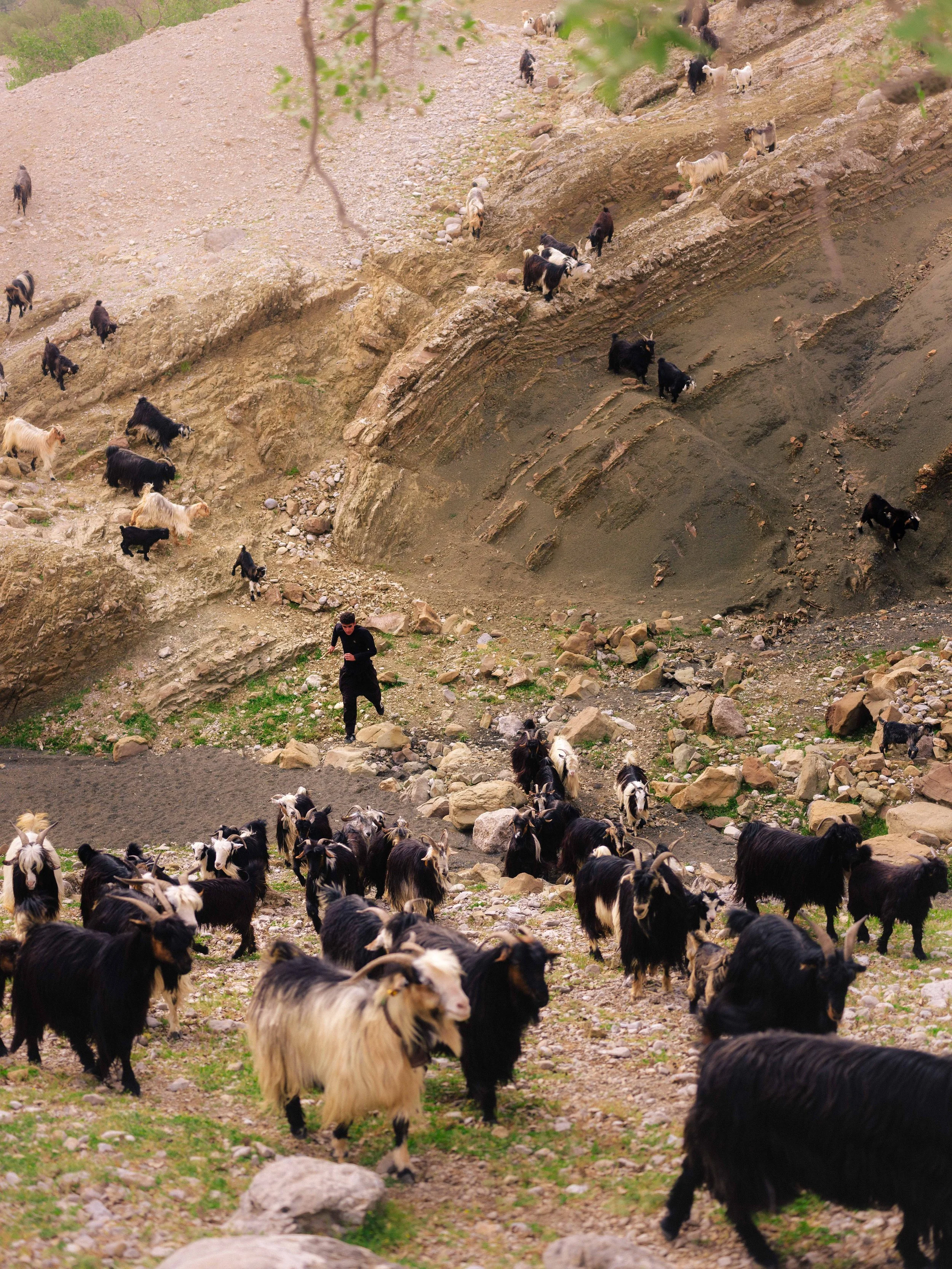
His responsibilities cover the entire passage of life to death for the goats.
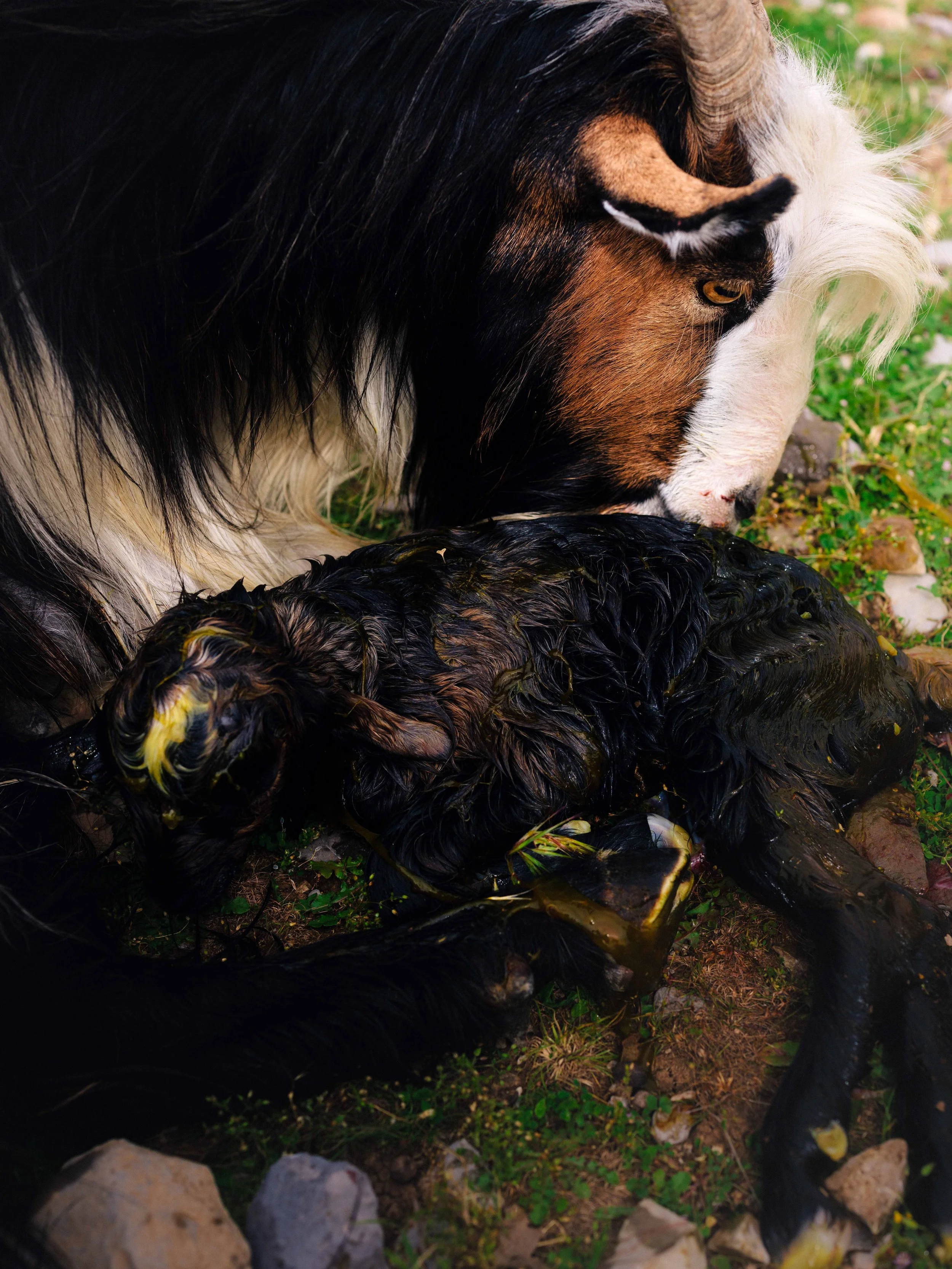
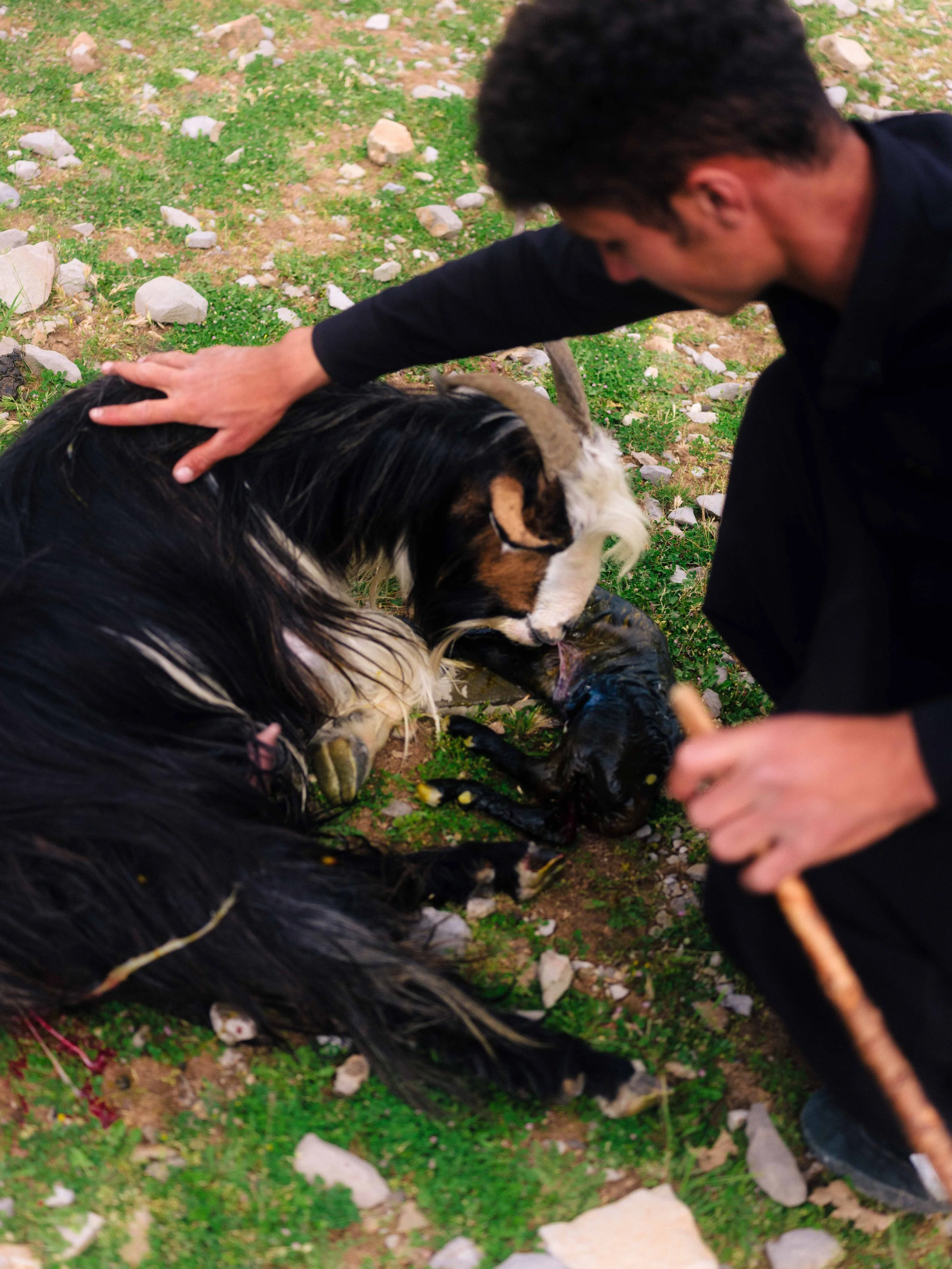
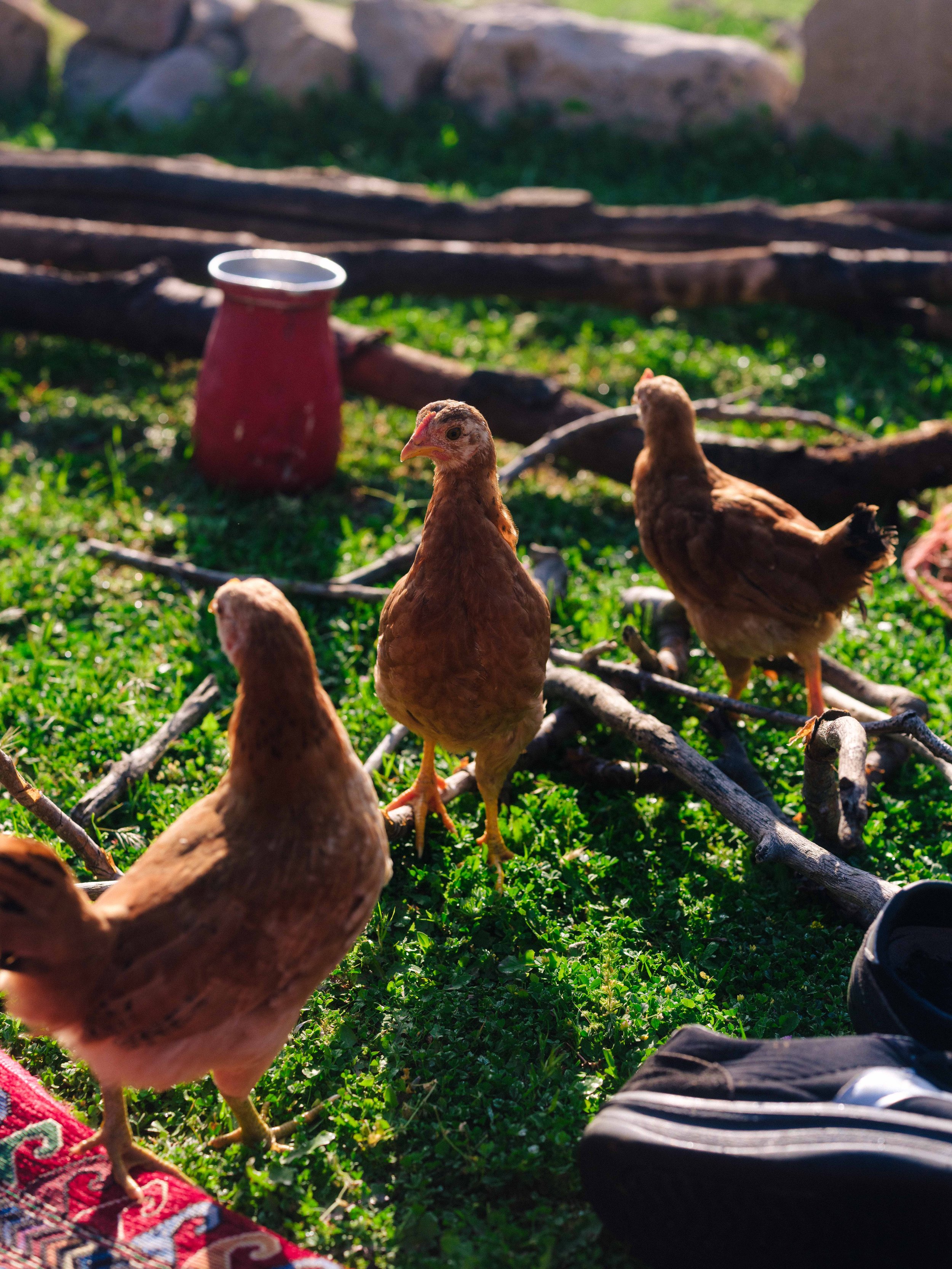
The newborn goats are often delivered by his hand, alone on the migration, and he would comfort the mother goat as they consume their placenta.
When his father picks out a goat to be slaughtered, he would wield the knife to slit its throat with Ashkan’s aid. It would be another long hour of skinning and gutting, arranging each organ and portion of meat neatly on a tin tray, and presenting the hide, clean and in its entirety, to his mother.
Ferdows does not intent to continue the nomadic life, and nor do his parents force it on him - it will only become harder.
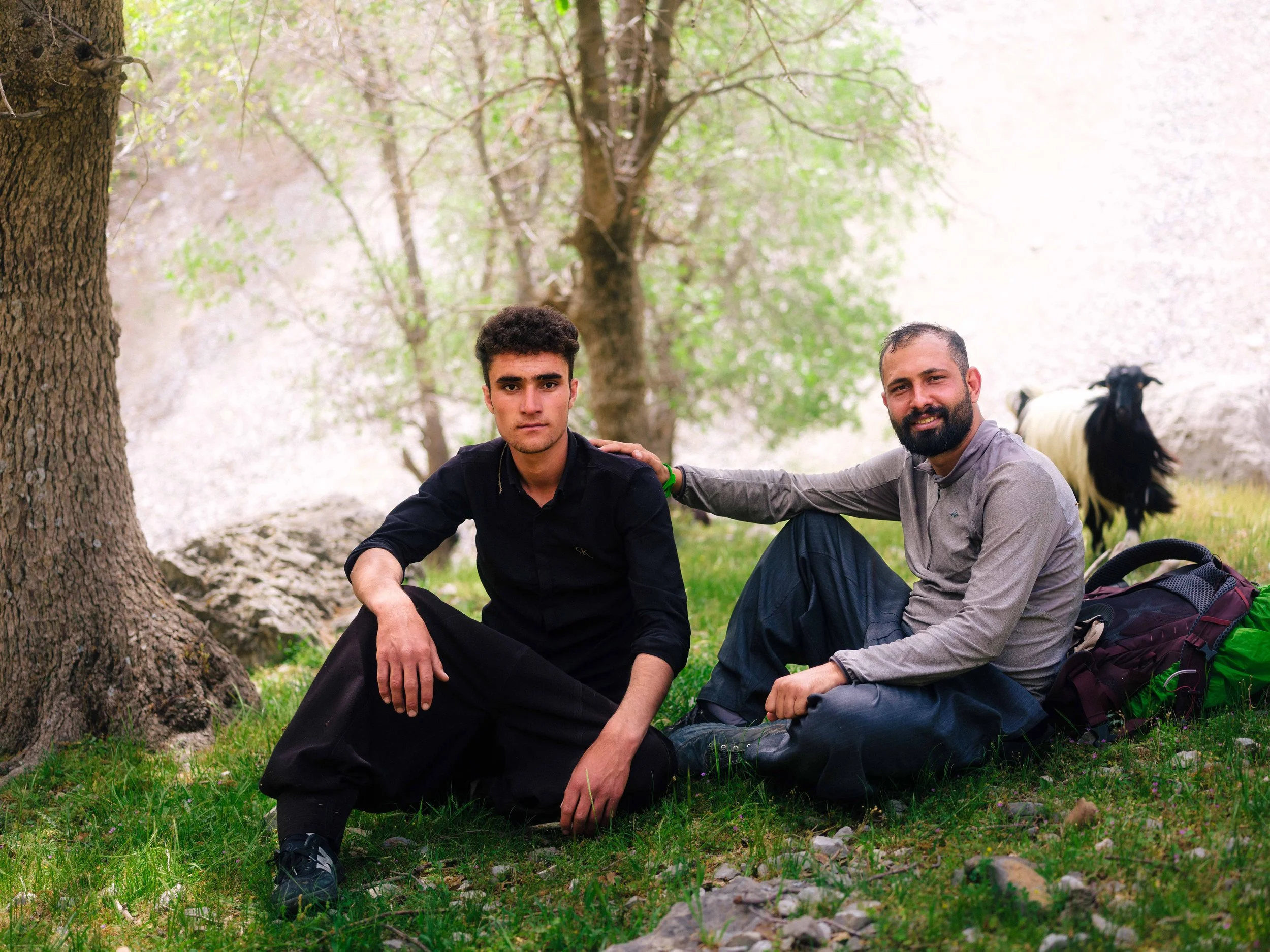
We spoke little - far less than I did with Ashkan - but his actions have always reflected an indisputably generous and humorous heart.
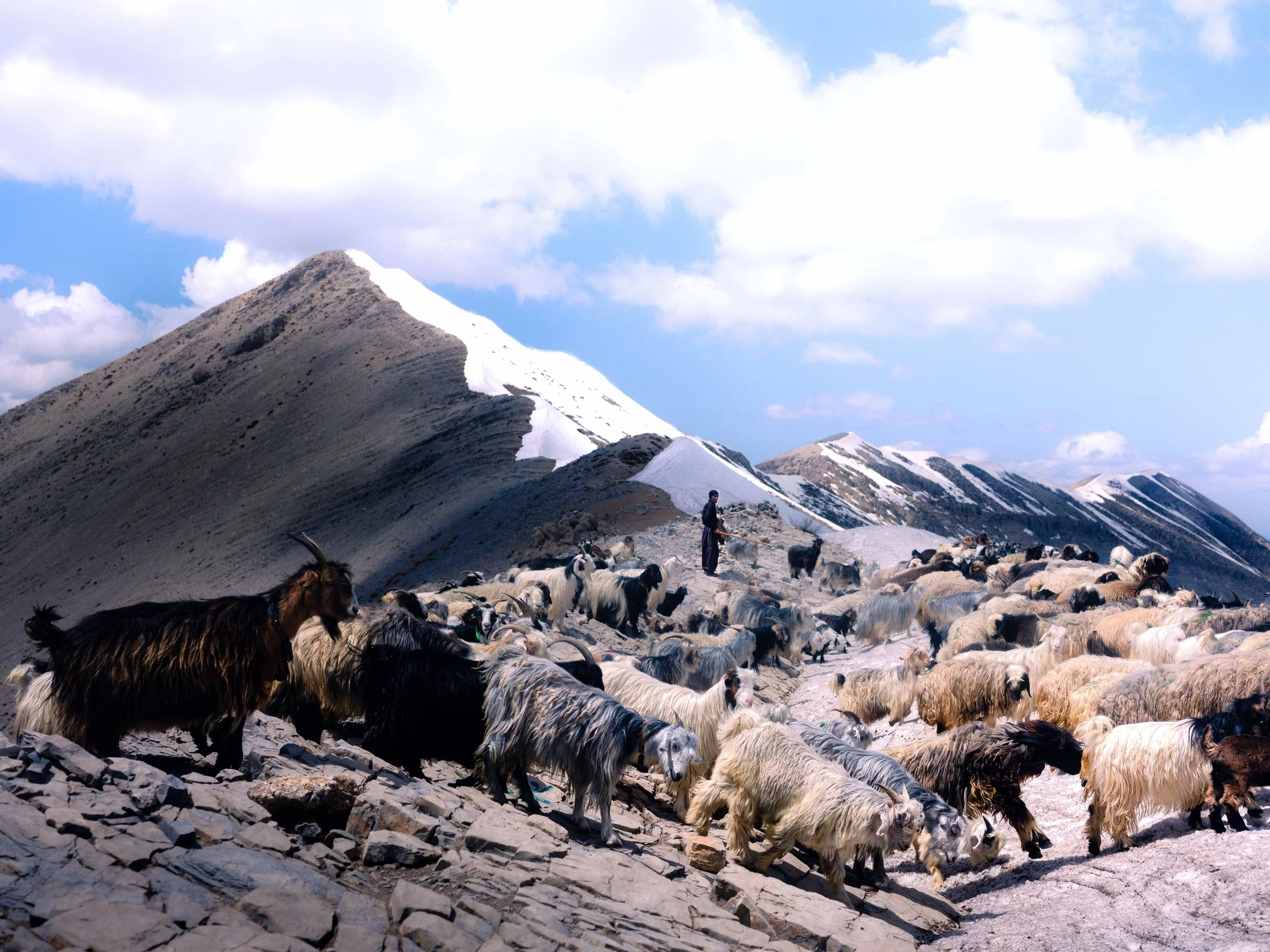
Celili Peak, Apr 2024
The ridgeline, at above 3000m asl., separates the winter pastures to the west and the summer pastures to the east.
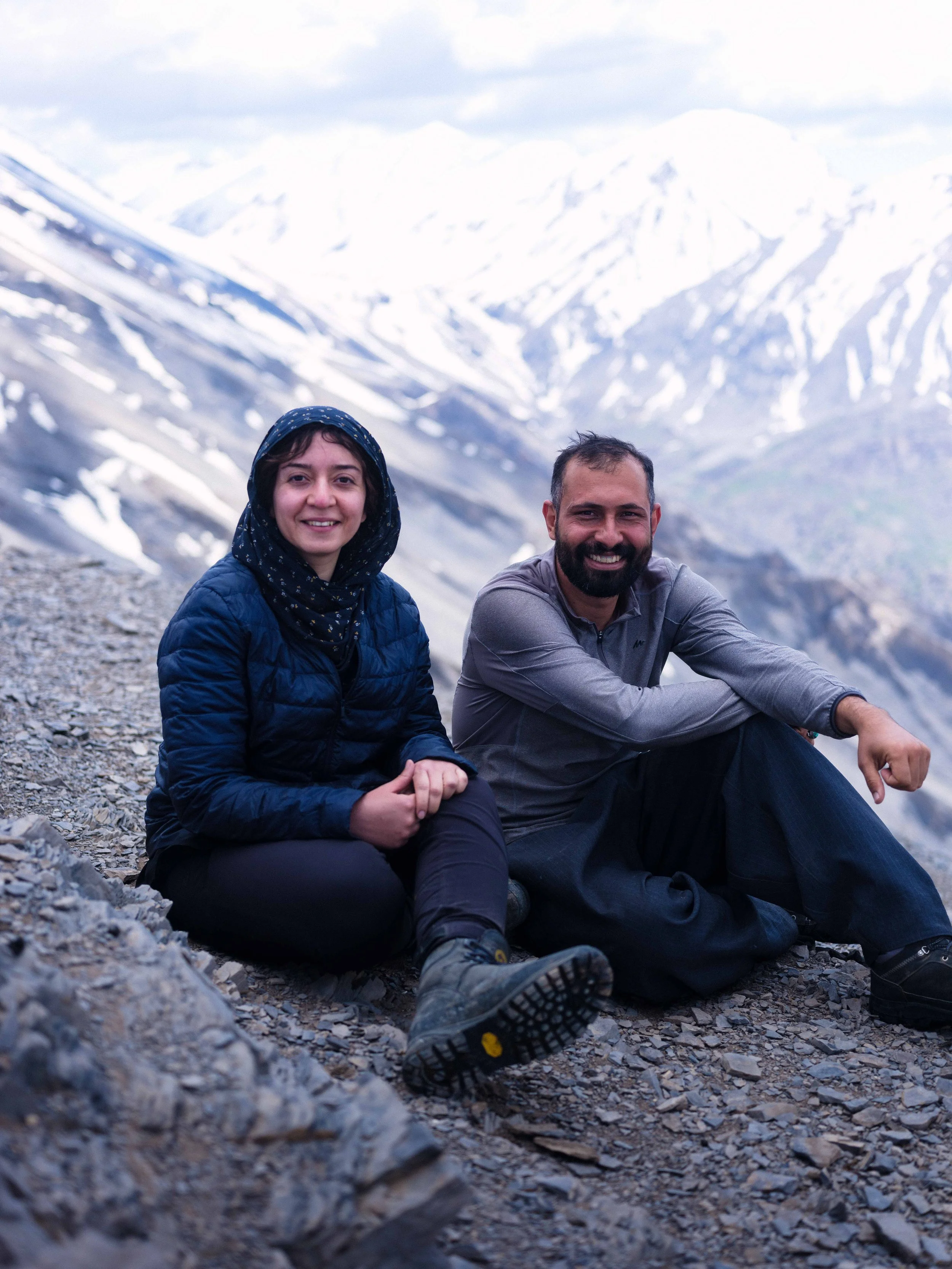
No more than a month after this image was taken, Mohammad would travel this path again to find a near absence of snow.
The pictured Nomad and his herd overtook us on the ascent, and established a simple camp for tea with his family just 100m below the col. We gratefully accepted their invitation to join, sharing dried fruits and bread from our own supply.
Summiting the col, he and his brothers performed a count as the herd was funnelled across the pass.
Returning to the city, I continued